
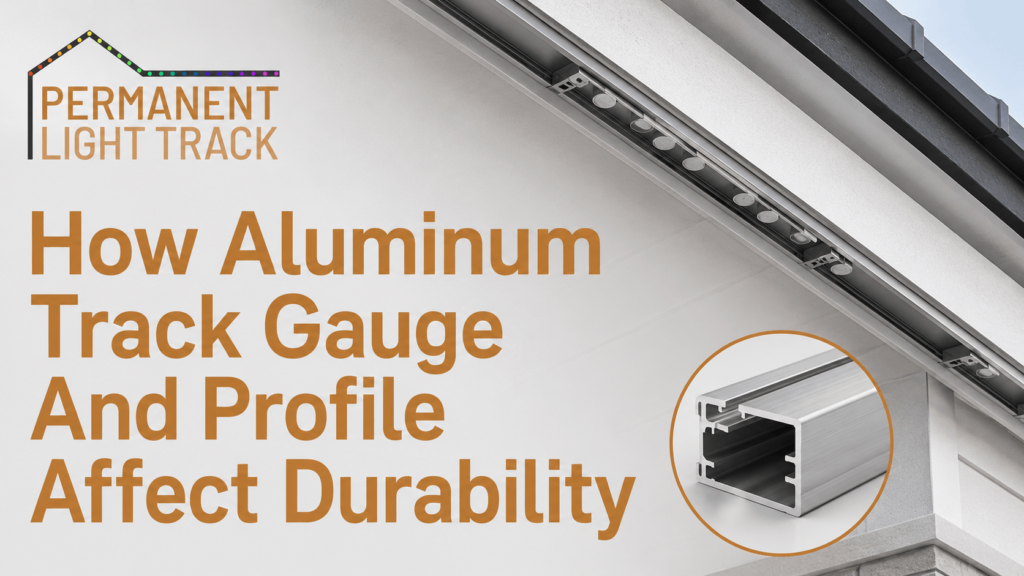
An aluminum track may look like a simple cover. Its thickness and shape influence how well it holds its form after installation. The track must stay straight, remain secure against the roofline, and protect the system inside it through heat, cold, wind, vibration, and routine exterior maintenance.
Two track products may appear similar from the ground and behave differently over time. A thin channel may flex during handling. A rigid profile can maintain a cleaner line along long roof edges.
Understanding gauge and profile helps homeowners compare track systems using structure, fit, and appearance.
What Does Aluminum Track Gauge Mean?
Gauge refers to the thickness of the aluminum used to form the track. Manufacturers may describe thickness in gauge, millimeters, or decimal inches, so comparisons should use the actual measurement whenever possible.
Thicker aluminum generally provides greater resistance to bending, denting, and twisting. It may also hold fasteners more securely when the design places mounting pressure directly on the metal.
Thickness still needs to suit the shape of the channel. A well-designed profile can gain strength from bends, ribs, and folded edges. A flat piece of thicker metal may flex more than a thinner channel formed into a rigid shape.
Why Thickness Matters During Installation
Track sections are handled, cut, drilled, fitted, and fastened before they reach their final position. Thin material can bend during these steps, and small distortions may become visible after several sections are installed in a straight run.
A suitable thickness helps the track:
- Stay straight during measuring and cutting
- Resist dents around screw locations
- Maintain its shape near corners and transitions
- Support long runs without visible waviness
- Hold up during future roofline service
How Profile Shape Adds Structural Strength
Profile describes the cross-sectional shape of the track. Common designs include shallow channels, deeper box-style channels, angled profiles, and tracks with folded edges or internal ribs.
Bends create stiffness. A flat strip can flex across its width. A formed channel resists movement because its sides reinforce the center.
| Profile Feature | Structural Effect | Practical Benefit |
| Deeper Sidewalls | Reduces Side-To-Side Flex | Straighter Long Runs |
| Folded Edges | Adds Rigidity At Openings | Cleaner Track Shape |
| Internal Ribs | Reinforces Broad Surfaces | Less Bowing |
| Wide Mounting Flange | Spreads Fastener Pressure | More Stable Attachment |
| Tight Channel Fit | Limits Internal Movement | Reduced Rattling |
Why Long Roofline Runs Need More Rigidity
Long, uninterrupted eaves make small track irregularities easier to see. A slight bend in one section may create a wave across several joints. Heat expansion can also place stress on long runs when spacing and fastening are poorly planned.
A rigid profile supports a consistent line from one end of the roof edge to the other. Fastener spacing remains important because large unsupported gaps can allow movement, especially on roof edges exposed to regular wind.
How Gauge Affects Fastener Performance
Fasteners create concentrated pressure around each hole. Thin track material may dimple when screws are driven too tightly. That deformation can pull the channel out of shape and create visible low spots.
Thicker metal provides more material around the fastener. A broad mounting surface can also spread pressure and help the track sit flat against the approved mounting area.
The fastening pattern should account for the length of each section, the mounting surface, and the amount of exposure along the roofline. Consistent spacing helps distribute weight and limits movement between attachment points.
Track Profiles For Different System Designs
The internal dimensions of the channel must match the components it is intended to hold. A loose profile may allow movement. A channel with insufficient interior space can create pressure points or make installation difficult.
Product-specific track is formed around the size and spacing of a particular system. For example, Govee permanent light track uses a channel layout intended for compatible components. The Asahom permanent light track follows its own product-specific dimensions and configuration.
Accurate internal dimensions also help maintain even spacing along the entire run. This can improve the finished appearance and make future section replacement easier.
Environmental Conditions That Test Track Durability
Exterior aluminum track faces repeated temperature changes. Metal expands as it heats and contracts as it cools. Planned joints, mounting points, and section lengths help manage that movement.
Wind can create vibration along exposed roof edges. Snow, ice, windblown branches, and maintenance equipment may also place temporary pressure on the track. A durable profile helps the channel retain its intended shape after minor stress.
Signs A Track May Lack Enough Support
- Wavy sections along long eaves
- Dents forming around fasteners
- Open seams between adjoining pieces
- Corners that no longer sit flush
- Rattling during strong wind
- Sagging between mounting points
- Distortion after seasonal temperature changes
These signs may develop gradually. Regular visual checks can help homeowners notice movement before several connected sections become affected.
Does Finish Affect Structural Durability?
Adequate gauge and profile strength create the structural foundation. The finish protects the aluminum surface and supports a consistent appearance.
A quality exterior coating can reduce visible oxidation, fading, staining, and surface wear. Aluminum naturally resists rust, and a suitable coating adds another layer of protection against year-round exposure.
The finish should also remain consistent across straight sections, corners, and replacement pieces. Uneven color or texture can make joints more noticeable from the ground.
How To Compare Aluminum Track Before Buying
A physical sample provides a clearer sense of thickness, rigidity, finish, and edge quality than a product photo.
Questions Worth Asking
- What is the measured aluminum thickness?
- Does the profile include folded edges or reinforcing ribs?
- How far apart are mounting points placed?
- How are long seams and corners connected?
- Is the coating intended for year-round exterior exposure?
- Is the track designed for the exact system being installed?
- How are damaged sections replaced later?
A sample should feel stable during light handling and return to its intended form without permanent deformation. The edges should appear clean, and the mounting surfaces should provide enough room for secure fastener placement.
Choose Track Structure For Long-Term Stability
Durable aluminum track depends on the relationship between material thickness, profile shape, mounting support, and finish. Gauge provides the base material strength. The profile turns that material into a rigid channel that can stay straight and secure along the roofline.
A good comparison should consider the complete track design, including section joints, corners, mounting flanges, fastener spacing, and system fit. These details influence how the installation looks after several seasons of temperature changes and exterior exposure.
Choosing a well-formed track with suitable thickness gives the roofline a cleaner appearance and a stronger structure for long-term use.

